Furniture Export Packaging: Packing, Marking and Container Loading
Why door and cabinet export packing has to be specified, not assumed: four protection layers, corner and edge protection, flat pack versus assembled shipping, ISPM 15 wood packaging, condensation control, marks and unit coding, and what to inspect before container sealing.
2026/11/18
Reading volume: 0
News Details
Why export packing is a specification, not a factory default
Domestic packing is designed for a truck journey of a few hundred kilometres and two or three handling points. Export packing has to survive four to six weeks inside a steel container, humidity swings between a tropical load port and a cold discharge port, and somewhere between six and ten transfers before the carton reaches a site store. Those are different problems, and a supplier who is not given a packing specification will normally quote the cheaper of the two.
For a project buyer ordering doors, wall panels or cabinets, this is the single easiest cost to control and the hardest to recover. A changed specification costs a conversation before the order; damaged edges, swollen panel ends and rejected units cost a claim, a re-make and a programme delay after it. Furniture export packaging is therefore best treated as a line item in the quotation, with a stated material specification and an inspection point, rather than as a service the factory provides by default.
The notes below set out what that specification normally contains. They apply to door sets, panel furniture and flat-packed cabinets alike, because the failure modes are the same: impact at corners, abrasion on finished faces, compression in a stacked load, and moisture.
The four protection layers in a project carton
A carton that arrives intact after a sea voyage is usually built in layers, and each layer does a different job. Missing one layer is what produces the familiar complaint that "the box was fine but the door was chipped".
| Layer | Typical material | What it protects | What to write in the order |
| Surface | EPE foam sheet or foam film; kraft or VCI paper on metal parts | Scuffing and finish transfer on lacquered or foiled faces | Film type, and confirmation that it does not react with the cured finish |
| Edges and corners | Moulded pulp, EPS or EPE corner blocks; L-profile edge boards | The impact points that hit first in every transfer | Corner block on every corner, edge board on long panel edges, fixed so it cannot fall away |
| Outer shell | Double-wall corrugated for standard units; triple-wall or honeycomb board for oversized panels | Compression in a stacked load and abrasion in handling | Board grade and stack height the carton must carry, not just "export carton" |
| Structural | Heat-treated timber pallet, skid or crate | Floor contact, forklift handling and heavy or fragile pieces | ISPM 15 mark, forklift access height, and which items must be crated rather than cartoned |
A simple test settles most arguments about carton strength: pack a unit, stack three identical cartons on it and leave them for a shift. Side-wall bulge, crushed corners or a failed closure means the grade is wrong, and it is far cheaper to find that in the factory than at the destination.
Corner, edge and face protection on door sets
Doors are the most exposed item in a mixed order. A door leaf is a large flat panel with four vulnerable edges, a finished face on both sides, and a frame and architrave that are thinner and easier to bend than the leaf. Packed badly, the damage is predictable: crushed corners, bruised edges on the lock side, and scuffing on the face where two leaves have rubbed together for a month.
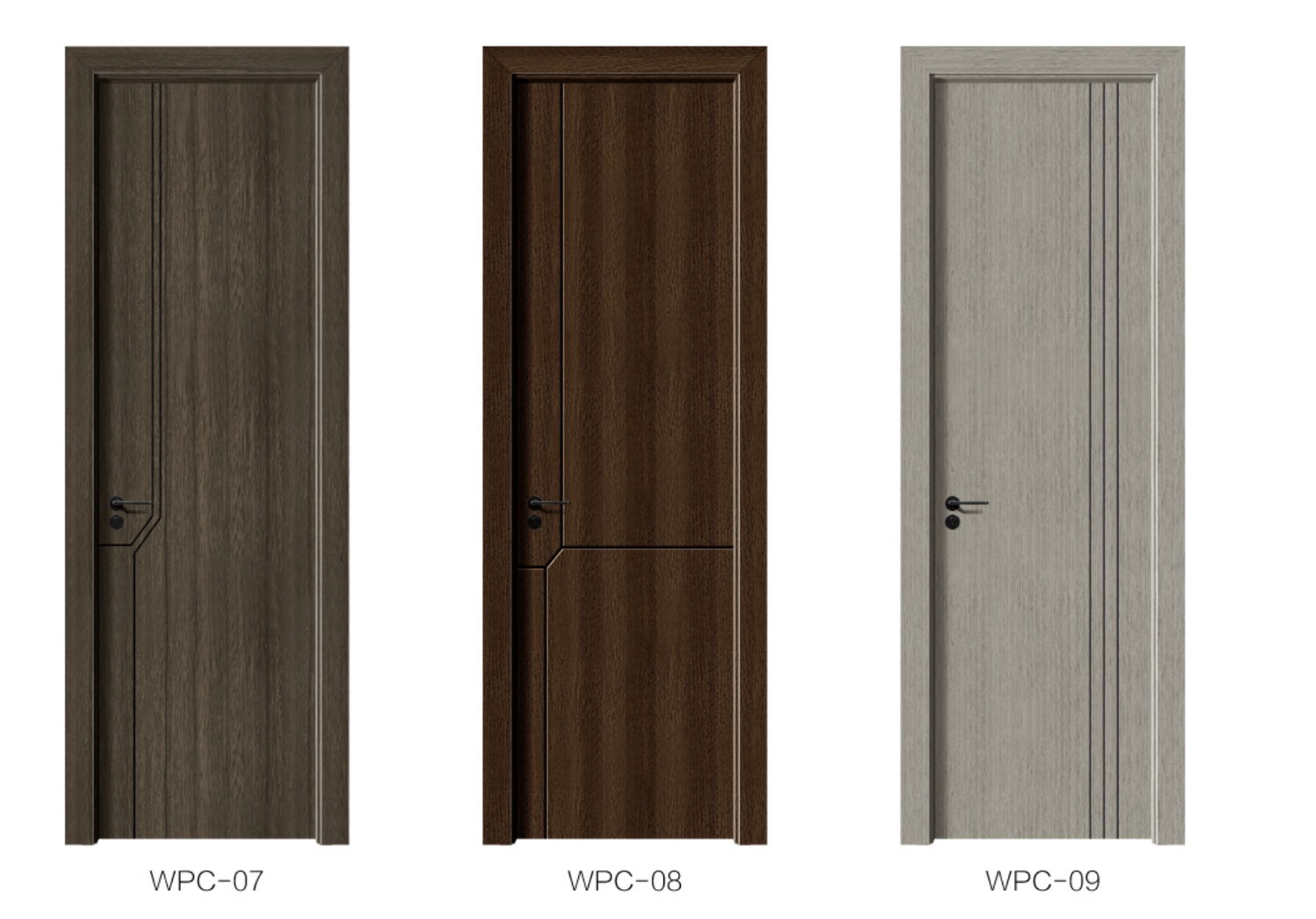
Three details are worth specifying separately. First, hardware should be removed or bagged and fixed inside the pack, never left on the leaf where it can press into the face of the unit behind it. Second, a door set should be packed as a set, with the frame and architrave protected and identified to the same opening, so that a fitter does not have to search for a frame that arrived in another carton. Third, where leaves are shipped as flat panels rather than in sets, they should travel on edge in a crate with separators, not stacked face to face under their own weight.
Flat pack or assembled: the volume decision
Whether a cabinet ships assembled or knocked down changes the freight cost, the packing cost and the site labour, and it should be decided per item rather than per order. Knock-down cabinets occupy substantially less volume, which matters when a container is priced by the cubic metre; the trade is more component identification, more fittings to count, and a set of assembly instructions that has to be right in the destination language.
Flat pack is usually the better answer for wardrobes, base cabinets and long panel runs. Assembled packing makes more sense for pieces that are difficult to re-assemble accurately on site, or where the labour to assemble is more expensive than the freight saved. Whichever way it goes, the decision has to be locked before carton sizes are set, because a later change in depth or height changes carton dimensions, pallet layout, container utilisation and the container loading plan at the same time.
Mixed orders complicate this further. A single container may carry door sets, flat-packed wardrobes and a run of wall panels, each with a different ideal orientation. Heavy items belong on the floor and over the axles, long panels travel on edge and need support along their length, and cartons that will be opened first on site should be loaded last. That sequence is easier to agree at the drawing stage than to renegotiate at the loading bay, and it is the part of a container loading plan that most often gets skipped when only the total volume has been quoted.
ISPM 15, pallets and crates
Any solid-wood packaging - pallets, crates, skids, dunnage and bracing - falls under ISPM 15, the international phytosanitary standard for wood packaging material. Compliant material is heat treated or fumigated and carries the IPPC mark with the country code, producer code and treatment code. Untreated or unstamped timber can be fumigated, re-exported or destroyed at the destination port, and it can hold the whole container, not just the pallet.
Two clarifications prevent expensive misunderstandings. Processed boards such as plywood and particleboard are generally outside the scope of the standard as packaging material, which is why many suppliers use them for crating. And ISPM 15 covers the packaging, not the product: a compliant pallet says nothing about destination rules that apply to wooden furniture or doors themselves. Both should be checked, and the pallet mark kept with the shipping documents.
Moisture, condensation and container rain
Wood and wood-based panels exchange moisture with the air around them. A container loaded in a warm, humid port and then passing through cooler conditions can form condensation on the roof and walls, which drips onto the cargo - commonly called container rain. Cartons absorb it, lose strength, and the damage shows up later as mould spots, swollen edges and lifted edge banding.
The controls are ordinary but they have to be scheduled. Confirm the moisture content of boards and timber before packing rather than after loading. Keep cartons off damp floors and out of rain during loading. Check that the container floorboards are dry before the first pallet goes in. Use desiccant as a supplement to dry goods, never as a remedy for wet ones. And be careful with sealed plastic wrapping: it slows moisture exchange on finished faces, but wrapping damp timber traps the moisture against it.
Marks, unit coding and the loading plan
Shipping marks are the cheapest form of insurance against site chaos. A carton should carry the purchase order, the item or SKU code, the room or unit number it belongs to, the quantity in the pack, the gross weight, the orientation arrows and any handling symbols that actually apply. Barcodes, where used, should be tested on the finished carton rather than approved from a design file.
Unit coding matters more than buyers expect. On a two-thousand-unit project, a carton marked only with a product code will be opened in the wrong apartment; one marked with the unit number and the opening reference goes to the right room without a conversation. The same logic applies to the loading plan: sequence the container by floor or unit type, brace the load so nothing can fall against the doors, and keep the plan with the packing list so the destination team can unload in the order it needs.
Inspection, photo records and the documents before the doors close
The last control point is the factory floor, not the port. Before a container is sealed, the packing should be checked against the approved specification and recorded: carton grade, corner protection in place, hardware bags counted, marks correct, pallet stamps present, container floor dry, load braced. Photographs and a short video of the packed units and the loaded container are worth keeping, because insurers frequently decline claims where packing cannot be shown to have been adequate.
Alongside the packing record, confirm the commercial documents required at destination and who prepares them. This is also the moment to agree the spare parts allowance - hinges, runners, edge repair material and a few touch-up items - because a small spares box costs very little now and avoids a separate air shipment later.
Ennor produces interior doors, wall panels and custom cabinets at its plant in Quanjiao County, Anhui Province, and exports to the United States, Germany, South Korea, Japan, the United Arab Emirates and Saudi Arabia. Where an order combines doors, panels and cabinets in one shipment, a single packing specification saves the most: one set of marks, one container loading plan and one inspection record covering the whole package.
Share to:


