WPC Doors for Humid Interiors: Material, Frames and Project Supply
A buyer-focused guide to WPC interior doors: how the composite performs in bathrooms and other damp rooms, how the leaf and frame function as a complete system, what to specify when ordering custom sizes and finishes, and how project and export orders are handled.
2026/11/12
Reading volume: 0
News Details
WPC Door: Complete Selection and Installation Guide
WPC, an acronym for Wood Plastic Composite, combines wood fibers with polymer binders. This unique composition differentiates it from traditional timber doors in significant ways: unlike wood, WPC door panels are non-absorbent and maintain their shape and structural integrity even when exposed to fluctuating indoor humidity. For a discerning buyer comparing quotations, understanding this material difference is the crucial first step. It forms the basis for all other decisions on this page, from selecting the ideal door for a specific room to determining the proper installation and long-term maintenance methods.
We offer our own range of WPC doors, detailed in a separate catalog, where each design is uniquely identified by a model number. For instance, WPC-01 features a brown wood-grain finish with a delicate inlay line, while WPC-02 presents the identical structure in a classic white. The catalog's numbering system extends to encompass various designs, including paneled and partially glazed options, allowing projects to select a cohesive family of doors that share the same construction but differ in their aesthetic facade.
It's crucial to differentiate between two key aspects at this stage: the inherent properties of the material itself and the specific functional requirements a particular door must fulfill. Our catalog defines the range as waterproof, moisture-proof, eco-friendly, and non-formaldehyde, boasting sound insulation, flame-retardant, and easy installation characteristics. These descriptions represent a well-defined product configuration. However, the actual performance of an installed WPC interior door depends on a combination of factors: edge sealing methods, whether the frame utilizes the same material, how the hardware is prepared, and significantly, the specific environmental conditions of the room it will inhabit.
Waterproof WPC Interior Doors: Ideal Applications
A waterproof WPC interior door is the logical choice for rooms where moisture is a daily occurrence rather than an anomaly. This includes bathrooms, shower rooms, laundry areas, kitchens, and residences in coastal regions or areas with high rainfall. In these environments, a traditional wooden door is subjected to conditions it was never designed to withstand. Moisture permeates through the surfaces, bottom edge, and any on-site cuts, leading to panel swelling, sticking, or delamination over time.
Conversely, the same principle dictates where a WPC door isn't automatically the optimal solution. Interior doors are fundamentally distinct from exterior doors. A WPC door leaf should not be specified for continuous direct water exposure, standing water, or use on an exposed facade, unless the particular configuration has been rigorously assessed and certified for such demanding applications. Furthermore, fire-rated openings and acoustic partitions necessitate specific assembly certifications, not merely the material's name. While our catalog describes the range as waterproof and moisture-proof, the practical question for any project is precisely what this entails: does it cover the door leaf's surface, the machined edges, or the complete assembly including the frame and architrave?
This is a critical inquiry that should be resolved in writing prior to placing an order. A supplier who can provide detailed information regarding edge sealing, frame material, and installation conditions is far more likely to adhere to the specified requirements than one who offers only cursory answers.
Selecting a WPC Interior Door for Bathrooms and Humid Environments
Below is our recommended process for handling bathroom door inquiries, designed to preempt and avoid most post-delivery complications.
- Measure the rough opening, not the existing door. Record the width, height, and wall thickness at three distinct points, as tiled walls are rarely perfectly square. Wall thickness is a critical factor in determining the appropriate frame and architrave dimensions.
- Determine the swing direction and necessary clearances first. Decide on the handing, then meticulously check the gap at the finished floor level, clearances to sanitary fixtures, and whether the door will swing against a shower screen.
- Clarify the contents of the quotation. A price for a door leaf alone cannot be directly compared to a price for a complete set. Ensure you explicitly ask whether the frame, architrave, hinges, lock preparation, and screws are included.
- Verify ventilation and floor drainage. A door cannot compensate for a wet room that consistently remains damp. In areas where water tends to pool at the threshold, it's imperative to adjust the architectural detail rather than simply upgrading the door's specification.
- Ensure frame and leaf materials are compatible. Installing a WPC door leaf within a moisture-sensitive frame merely shifts the potential failure point; it doesn't eliminate the underlying issue.
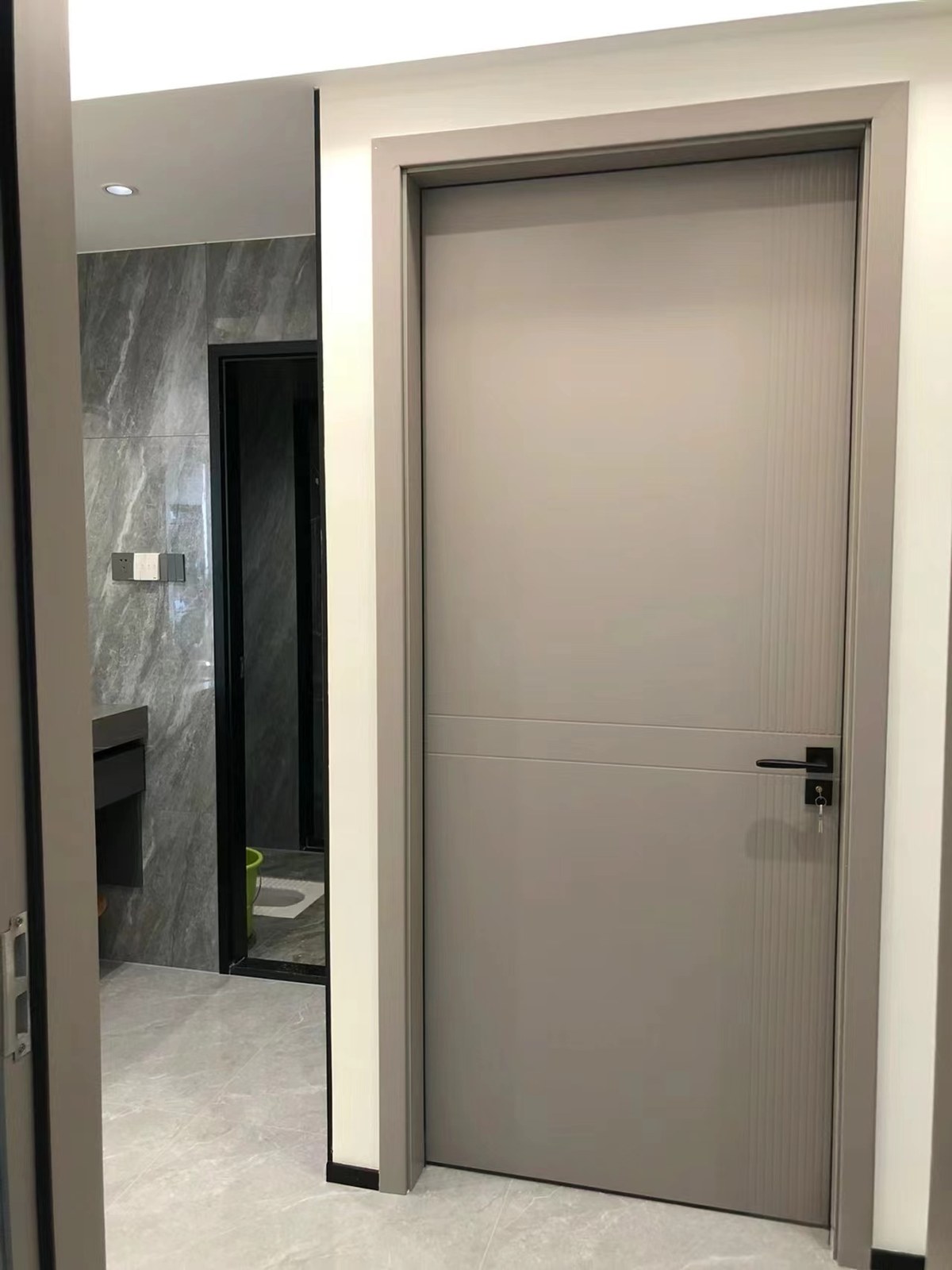
WPC Door vs. Wooden Door: Practical On-Site Differences
The most pertinent comparison isn't about which material is inherently superior, but rather which is best suited for the specific room, maintenance expectations, and the project's desired warranty period. The table below outlines the most frequently observed distinctions in residential and commercial project applications.
| Consideration | WPC Door | Wooden Door |
| Moisture in Daily Use | Composite material does not absorb water like wood; performance still relies on sealed edges and a matching frame. | Absorbs moisture through surfaces and cut edges; necessitates protection and periodic re-finishing in damp environments. |
| Humidity-Driven Movement | Dimensionally stable under typical interior conditions, ensuring consistent hardware alignment. | Seasonally expands and contracts; sticking and gap variations are common during humid periods. |
| Termites and Borers | Not a food source for insects, eliminating the need for chemical treatments. | Requires treated timber and regular inspections. |
| Maintenance | Wipe clean; no sanding, sealing, or repainting required. | Requires periodic re-sealing, repainting, or polishing, with increased frequency in wet rooms. |
| Damage and Repair | Surface marks can typically be cleaned or touched up; deep impact damage is more challenging to conceal. | Can be sanded and re-finished, making it suitable for heritage restoration and high-end joinery projects. |
| Hardware and Fastenings | Requires precise pre-drilling and a reinforcement detail agreed upon for hinge and lock positions. | Exhibits excellent screw-holding properties in solid sections, beneficial for heavy ironmongery. |
| Finish Options | Offers wood-grain and solid-color surfaces; consistent color across large batches. | Provides genuine wood grain and carving; exhibits wider natural variations between individual pieces. |
| Best Applications | Bathrooms, kitchens, utility rooms, hotels, apartments, and coastal projects. | Main entrances, heritage interiors, and applications where the natural character of timber is desired. |
The information presented in this table does not negate the necessity for a like-for-like quotation. A lighter door leaf with a simple frame and a heavier leaf with a reinforced hinge detail are fundamentally different products. A fair comparison must maintain consistency in thickness, frame specification, hardware, and finish before directly juxtaposing prices.
Door Leaf, WPC Door Frame, and Jamb: An Integrated System
The majority of moisture-related complaints we encounter do not actually stem from the door leaf itself. They originate from the frame: a timber jamb in a tiled bathroom, an architrave installed with gaps behind it, or unsealed cut edges at the bottom where water tends to accumulate. Treating the door as a cohesive system, rather than a mere slab, effectively mitigates these issues.
A complete door system comprises the leaf, the frame or jamb, the architrave, and the pre-preparation for hinges and the lock. When the frame is manufactured from the same material family as the leaf, the wall junction and threshold cease to be vulnerable points. The frame also dictates the tolerances within which the leaf must operate. Consequently, sourcing both components from a single supplier eliminates disputes regarding which component is responsible for a sticking door.
Crucial practical considerations to confirm during a site survey include: the wall thickness used for determining frame depth, whether the architrave is included on one or both sides of the wall, the method of securing the frame to the wall, and whether hinge and lock positions are pre-machined at the factory. Factory pre-preparation significantly reduces on-site installation time and minimizes the number of cuts made to a finished surface.
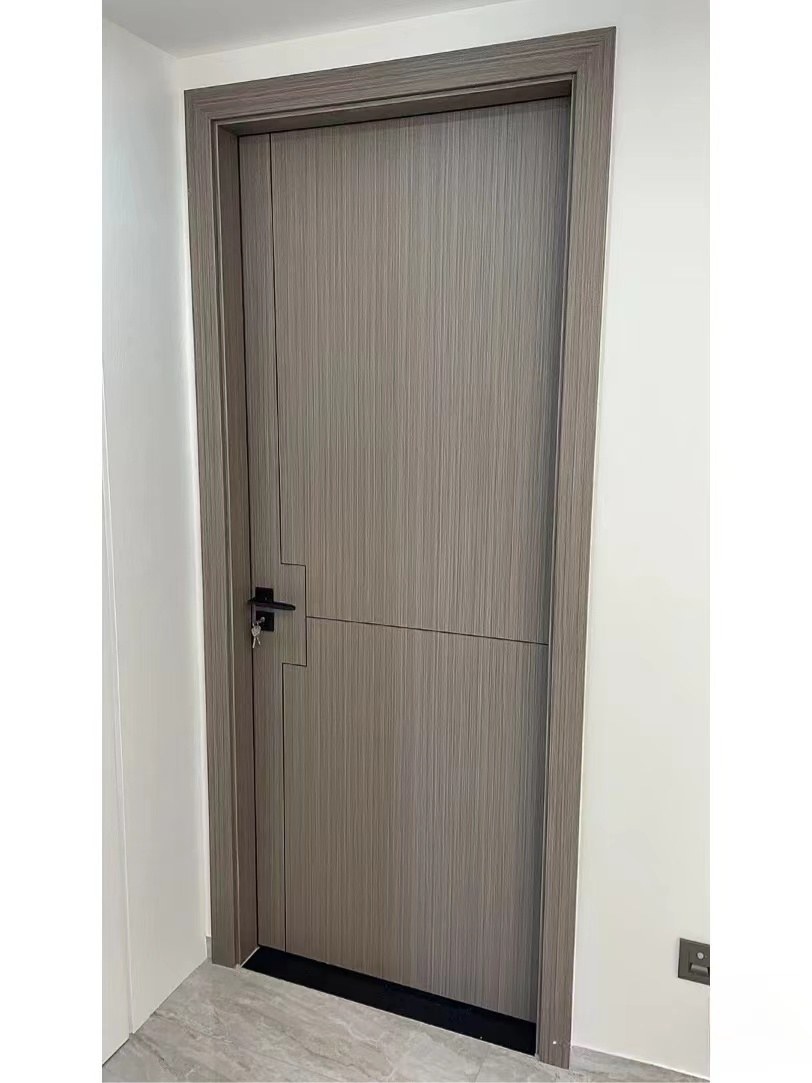
Custom Size WPC Doors and Surface Finishes
Standard door dimensions are often the exception in renovation projects. Older buildings, tiled bathrooms, and unique project layouts frequently necessitate doors that deviate from catalog sizes. This is where a manufacturer with capabilities in custom woodworking holds a distinct advantage. Our production facility is configured to handle made-to-measure orders rather than relying solely on fixed, standardized modules.
Custom-sized WPC doors still demand a precise and clear specification. Provide the exact rough opening dimensions and intended clearances, rather than an approximate leaf size. Clearly state the wall thickness for frame sizing, confirm the handing on a drawing, and agree upon the maximum leaf width and height that the chosen construction can support with the specified hardware. In instances where the rough opening is out of square, a slightly oversized frame that can be packed and trimmed on-site is generally more reliable than forcing a precisely sized leaf into a distorted reveal.
Regarding finishes, our catalog pairs wood-grain surfaces with solid colors, allowing a cohesive design family to be implemented across an entire floor, unifying doors, wall panels, and cabinet fronts into a single aesthetic scheme. For projects requiring a painted finish, our mixed-oil solid wood composite range fulfills this requirement. In all cases, the approved physical sample serves as the ultimate reference. Surface color, sheen, and edge treatment must be visually and physically verified, as digital representations on screens cannot reliably convey gloss or texture.

WPC Door Installation and Maintenance
The installation process is paramount in ensuring that the inherent material properties are fully realized. The frame must be installed plumb and level, shimmed securely behind the hinges, and fixed without distorting the jamb. Hinge and lock positions should be pre-drilled according to the agreed-upon detail; driving screws directly into a composite material without a pilot hole increases the risk of future loosening. Any cuts made on-site – whether to trim a frame leg, adjust an architrave, or accommodate a new hardware position – must be sealed before being concealed. Furthermore, the bottom edge of the door leaf should be positioned clear of the finished floor to prevent cleaning water from resting against it.
Maintenance is intentionally straightforward: wipe the surface with a damp cloth and a mild detergent, avoid abrasive pads and harsh solvents, and periodically lubricate the hinges and lock mechanism. It is recommended to inspect the sealant at the threshold and around the frame annually, particularly in bathrooms and kitchens. This sealant bead is critical in preventing water ingress into assembly components not designed for wet conditions. Surface scuffs can generally be cleaned off; however, deeper damage should be carefully assessed before attempting repairs, as over-sanding a finished surface is difficult to rectify.
Project Supply, Factory Capacity, and Export
In this market segment, WPC doors are rarely purchased individually. Orders typically arrive as hotel floors, apartment packages, or complete villa fit-outs. Consequently, the focus shifts from individual product design to aspects such as repeatability, packaging, and delivery logistics.
Hotel and Apartment Project References
Our portfolio includes residential and commercial fit-out projects throughout China. A 3,168-set package of doors and fire-rated doors for the Yuanchuang Chenyue project in Nantong commenced on-site in April 2023. The Huarun Xingfuli project in Zhengzhou, encompassing 2,528 sets of wall panels, bathroom cabinets, and entry cabinets, started in August 2023. Door packages for the NetEase Lantian project in Shanghai, along with bathroom and kitchen cabinets for the Lingang project, were initiated in the same period. While these are domestic projects, they exemplify the operational model that overseas clients also require: a single supplier capable of delivering doors, panels, and cabinets through a phased handover process.
Factory, Export, and Key Considerations Before Ordering
Established in 2010, Anhui Yuanbo Smart Home Co., Ltd. operates from Dashu Town, Quanjiao County, Chuzhou City, Anhui Province. Our facility spans a 26,000-square-meter site, featuring a 12,000-square-meter production workshop. The plant utilizes automated production equipment alongside skilled hand finishing, with an in-house team dedicated to product development and detailing. Our products are sold across more than thirty provinces in China and exported to the United States, Germany, South Korea, Japan, the United Arab Emirates, and Saudi Arabia, where a local partner provides support for door orders.
Prior to finalizing an export order, it is essential to document four key agreements in writing: the approved physical sample and accompanying specification sheet, including details for the frame and hardware; the designated packing method and corner protection for container loading; the agreed-upon inspection process for verifying quantity, dimensions, and finish; and a comprehensive list of all required documentation for customs clearance at the destination. A supplier who can provide precise and detailed responses to these four points is generally well-positioned to consistently replicate the specified requirements on subsequent orders.
Share to:


