What Are the Most Common Problems with Composite Doors?
News Details
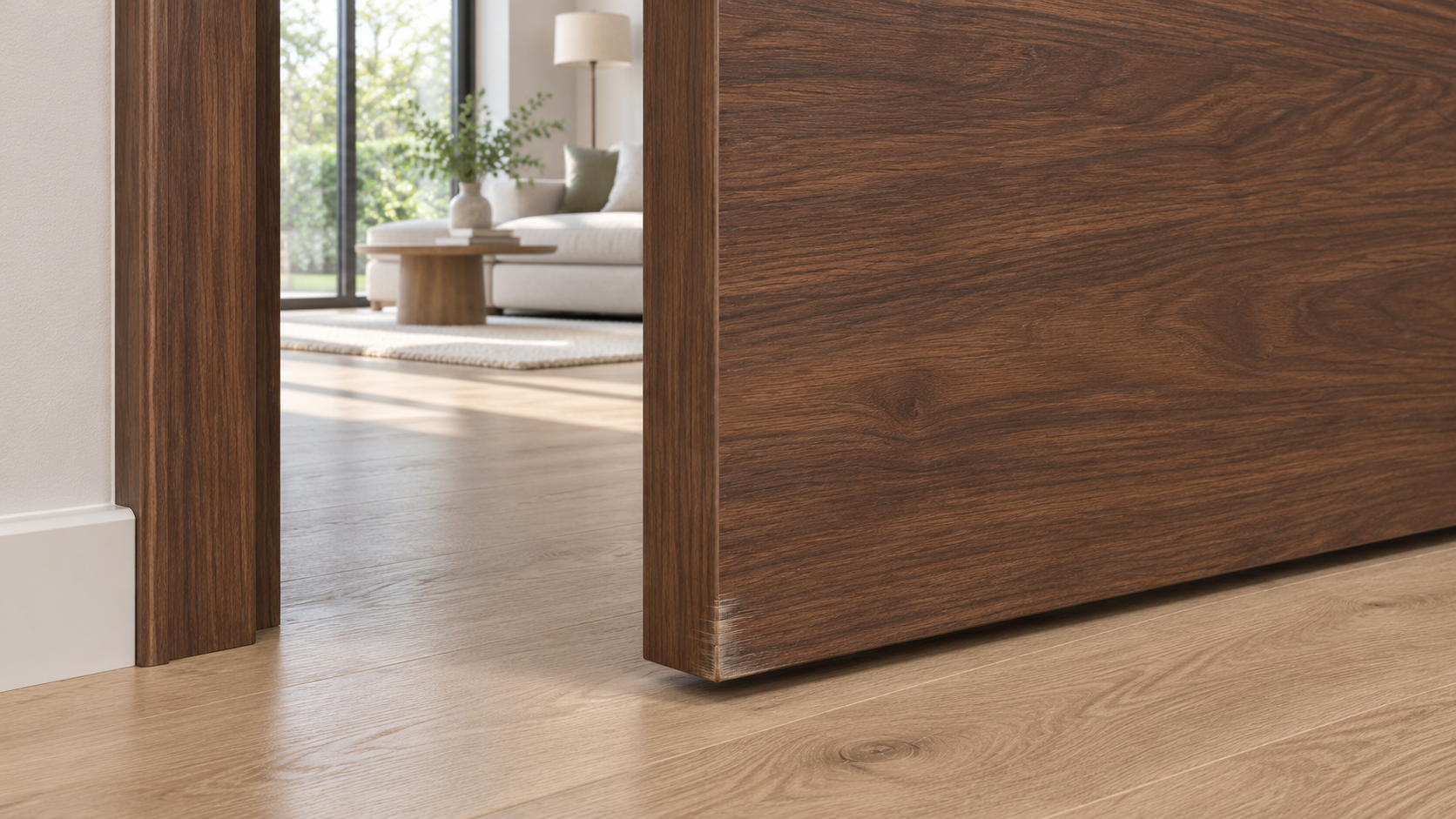
Typical issues with composite doors include sticking or rubbing at the frame, a stiff handle or lock, draughts around the edges, water at the threshold, and scratches on the finish. Begin by noting where the problem occurs and when it first appeared. A front door that has rubbed at the same corner since installation gives the fitter a different clue from one that catches only after an afternoon in direct sun.
What Is a Composite Door?
A composite door combines materials. Many exterior entrance doors have a protective outer skin over a timber or insulating foam core. Wood plastic composite (WPC) doors use a blend of wood-based material and plastic. ENNOR’s WPC range includes doors designed for bedrooms, studies, and other interior spaces. Before choosing a repair method, identify the model, its finish, and whether it was designed for the opening where it is fitted.
For a closer look at door cores, skins, and frames, read [What Are Composite Doors Made Of?]
Why Do Composite Front Doors Stick or Rub?
Close the door slowly and watch the gap between the door and frame. Where does the edge first make contact? A fresh rub mark on the lower corner can help an installer trace a fit or hinge issue. If the door catches only near the latch, show the installer that spot as well. A photo of the whole doorway gives context that a close-up alone may miss.
For composite front doors exposed to direct sun, record whether the fit changes as the door heats up and cools down. If it closes freely in the morning but sticks each afternoon, give the installer those times. Before sanding or trimming the edge, ask the supplier to check the alignment and confirm what alterations the model allows.
Why Is the Handle Hard to Lift or the Key Hard to Turn?
First, identify which action feels stiff. Does the handle resist as you lift it? Does the latch scrape as the door closes? Or does the key stick when you turn it? These details help the installer decide whether to inspect the lock, the hinges, or the metal plates on the frame that receive the locking points.
If you have to pull the door toward you to turn the key, mention that when you report the fault. Avoid forcing the handle. If the hardware needs lubrication, follow the care guide for the fitted lock. The lock cylinder and the other moving parts may require different products.
Why Do Composite Back Doors Let In Draughts or Water?
Start with the location. If you feel a draught along one edge, open the door and inspect the flexible seal at that spot. Look for dirt, a folded section, or a strip that has slipped out of its groove. If the seal looks sound but the draught persists, ask the installer to check whether the door presses evenly against it when closed.
Water at the bottom calls for a different check. Some composite back doors have drainage slots in the threshold that carry rainwater outside. Garden debris can block these slots. Check the model’s care guide before cleaning the sill, and keep the drainage openings clear. If water still reaches the indoor floor, photograph where it first appears during rain. That helps the installer narrow down where to inspect.
What Causes Scratches and Marks on Composite Doors?
Look closely before treating a mark near the handle or along the bottom edge. It may be surface dirt that lifts with cleaning, or it may be a scratch through the finish. Use the cleaning method specified for the door. A soft cloth and mild soapy water are common care instructions. Abrasive pads can damage the surface.
If a scratch remains, send the supplier a photo and the finish code before buying touch-up paint. On a wood-grain door, a repair must match the grain and sheen as well as the colour. For a project with several matching doors, keep an approved finish sample so the maintenance team has a reference.
What Should You Check on Composite Stable Doors and Composite Garage Doors?
Composite stable doors have an extra joint where the upper and lower sections meet. If the door catches, note whether each half moves freely on its own and whether the problem starts when you join them. If you feel a draught, identify whether it comes through the middle joint or around the outer frame. Tell the installer which section was open, closed, or latched when you noticed it.
For composite garage doors, specify whether you mean the large vehicle door or a separate pedestrian door. For a powered vehicle door, record the model of the door and opener, where it stops during travel, and any message shown on the controls. For a hinged side door, record where the leaf rubs or where water enters. These details help the service team identify which equipment needs attention.
How Can Buyers Prevent Composite Door Problems?
Start with the opening. An exposed front entrance needs documented weather performance for the complete door set. A bedroom door may call for a particular finish, swing direction, and privacy latch. Give each opening its own line on the order, even if all the doors will look alike.
For example, ENNOR’s walnut-brown WPC-04 has a plain flush face, while the light beige WPC-12 has fine black lines near the handle. Both are interior models. When ordering, confirm the frame depth, hinge side, handle, and finish against the room drawing. Explore the ENNOR WPC-04 interior door and ENNOR WPC-12 interior door.
At handover, open, close, latch, and lock each door while the installer is present. Record any rubbing, stiff movement, or visible finish damage against the room number. Keep the model code, approved sample, and care guide with that record. If a problem appears later, you can tell the supplier exactly which door needs attention and what has changed since fitting.


