What Are Composite Doors Made Of?
News Details
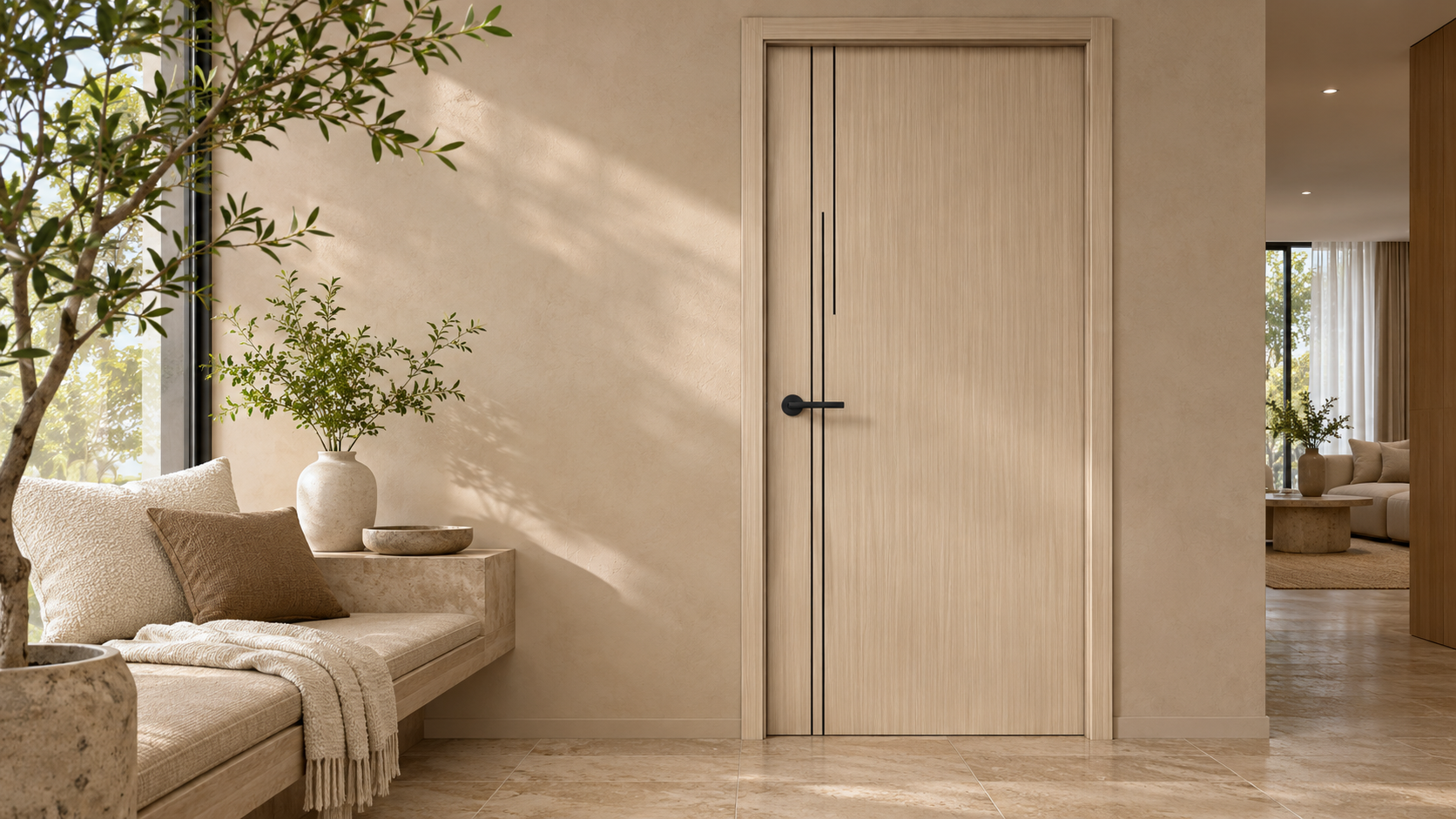
Composite doors combine materials to meet different needs, from strength and insulation to surface finish. However, the word “composite” does not describe one fixed recipe.
For example, an exterior entrance door may have a reinforced core and a protective outer skin. A wood plastic composite door, often called a WPC door, uses a different material system and may be designed for indoor use. Therefore, understanding the construction is the first step toward choosing the right product.
This guide explains common door materials, highlights the needs of different openings, and introduces ENNOR’s WPC interior options.
What Is a Composite Door?
A composite door combines two or more materials within its structure or material blend. Each part serves a purpose.
In many exterior designs, timber or foam forms the core, while glass-reinforced plastic (GRP) protects the surface. Other designs use metal, boards, or different combinations.
The main parts can include:
- Core: Provides structure, insulation, or both.
- Outer surface: Gives the door its appearance and protects the material beneath it.
- Frame: Supports the door and holds the fixing points.
- Seals and threshold: Help control gaps around an exterior opening.
- Hardware: Allows the door to open, close, and lock.
The material list is useful, but it does not prove the performance of the finished door.
What Are WPC Composite Doors Made Of?
WPC stands for wood plastic composite. It combines wood-based material with plastic. However, a WPC label alone does not explain the full door structure, surface treatment, or frame specification.
ENNOR lists WPC models for interior applications. For instance, its WPC-12 uses wood plastic composite and has a light beige wood-grain appearance. Its listed intended use is indoors.
Before placing an order, ask the supplier:
- What is the door’s internal structure?
- What surface finish is applied?
- Which materials are used for the frame?
- Where are hinges and locks fixed?
- How much site trimming is allowed?
- Which applications does the warranty cover?
These questions help turn a broad material description into a clear purchasing specification.
Composite Front Doors: Check the Complete Entrance
Composite front doors need to suit the building’s entrance conditions. A sheltered doorway and an entrance exposed to strong sun and rain may require different specifications.
Start by asking for the proposed door leaf, frame, threshold, seals, and hardware as one complete package. Then request performance evidence for that configuration.
Useful points to check include:
- Suitability for outdoor exposure.
- Thermal performance of the complete door set.
- Security features and supporting test documents.
- Glazing options, where required.
- Installation details and warranty conditions.
Also, clarify what the quotation includes. A low panel price may exclude the frame, lock, handles, or fitting accessories.
For a coordinated project, select the exterior entrance and interior doors separately, then align their colors and design.
Composite Back Doors: Plan Around Daily Use
Composite back doors often serve kitchens, utility rooms, or garden access points. As a result, practical details deserve as much attention as appearance.
First, decide whether the opening needs glazing. Next, review privacy, clear opening width, and the position of nearby cabinets or appliances. Finally, confirm the swing direction before production.
Prepare the following details for the supplier:
| Project detail | What to confirm |
| Location | Sheltered or exposed to outdoor weather |
| Opening | Frame dimensions and required clear width |
| Glazing | Privacy, daylight, and specified performance |
| Threshold | Access needs and weather-sealing arrangement |
| Hardware | Handle position, lock type, and finish |
| Installation | Wall construction and fixing method |
Do not select an interior door for a rear entrance simply because its material is described as moisture resistant. ENNOR’s own guidance distinguishes interior WPC products from exterior door systems.
Composite Stable Doors: Review Both Opening Sections
Composite stable doors have separate upper and lower sections. The upper section can open while the lower section stays closed, offering a different way to ventilate a room.
When requesting a quote, ask the supplier to explain how both sections operate together. Include questions about:
- The seal where the two sections meet.
- Locks and connecting hardware.
- Alignment and adjustment.
- Weather performance when fully closed.
- Available sizes and glazing layouts.
A useful sample review should include opening each section, joining them, and closing the complete door. This gives buyers a clearer view of daily operation than a photograph alone.
Composite Garage Doors: Define the Door Type First
When sourcing composite garage doors, begin by stating exactly which opening you mean. A vehicle entrance and a pedestrian access door require different specifications.
For a vehicle entrance, include the opening size, required operating method, available installation space, and whether powered operation is needed. Ask the supplier to identify the panel materials and the supporting structure.
Also, clarify whether “composite” describes the complete panel or only its decorative surface. Request drawings and a material breakdown before comparing quotations.
For a pedestrian garage door, prepare a separate brief covering access, locks, exposure, and any project-specific performance requirements.
This avoids comparing products that share a name but serve different purposes.
ENNOR WPC Interior Doors: Materials Meet Interior Design
ENNOR’s WPC interior range gives project buyers several ways to coordinate door finishes with room designs.
Walnut Brown WPC-04
The ENNOR WPC-04 interior door features a flat, flush face and a walnut-brown wood-grain finish. ENNOR describes it as moisture resistant and lists applications such as bedrooms, bathrooms, apartments, and hotels.
Its simple appearance makes it an option to consider alongside warm wood tones and clean interior lines. Buyers can discuss dimensions, finishes, hardware, and packaging with ENNOR.
Light Beige WPC-12
The ENNOR WPC-12 interior door combines a pale wood-look surface with slim black accents. It offers a lighter visual option for bedrooms, studies, and other interior spaces.
Sizes, finishes, frame details, and hardware are subject to project confirmation. Approve these details together so the final doorway has a consistent appearance.
How to Compare Composite Door Quotations
A useful quotation should describe what will arrive on site. Before comparing prices, send each supplier the same door schedule.
Include opening dimensions, quantities, room locations, swing directions, finishes, and hardware needs. Then ask for a clear list of included and excluded items.
For bulk orders, use this review process:
- Confirm the application. Identify interior and exterior openings.
- Review the construction. Request panel, frame, and surface details.
- Check required evidence. Match performance documents to the proposed model.
- Approve a sample. Review color, texture, joints, and operation.
- Confirm delivery details. Agree on labels, packaging, and installation information.
Keep the approved sample and written specification as shared references throughout production.
Choose Composite Doors with ENNOR
The right composite door starts with a clear understanding of its materials and intended use. Front, back, stable, garage, and interior doors should each have a specification suited to their opening.
For interior projects, explore ENNOR’s WPC doors and custom interior solutions. Share your dimensions, quantities, preferred finishes, and hardware needs to discuss suitable options for a coordinated result.


