WPC Doors for Whole House Custom Interiors: A Durable, Low-VOC Option
News Details
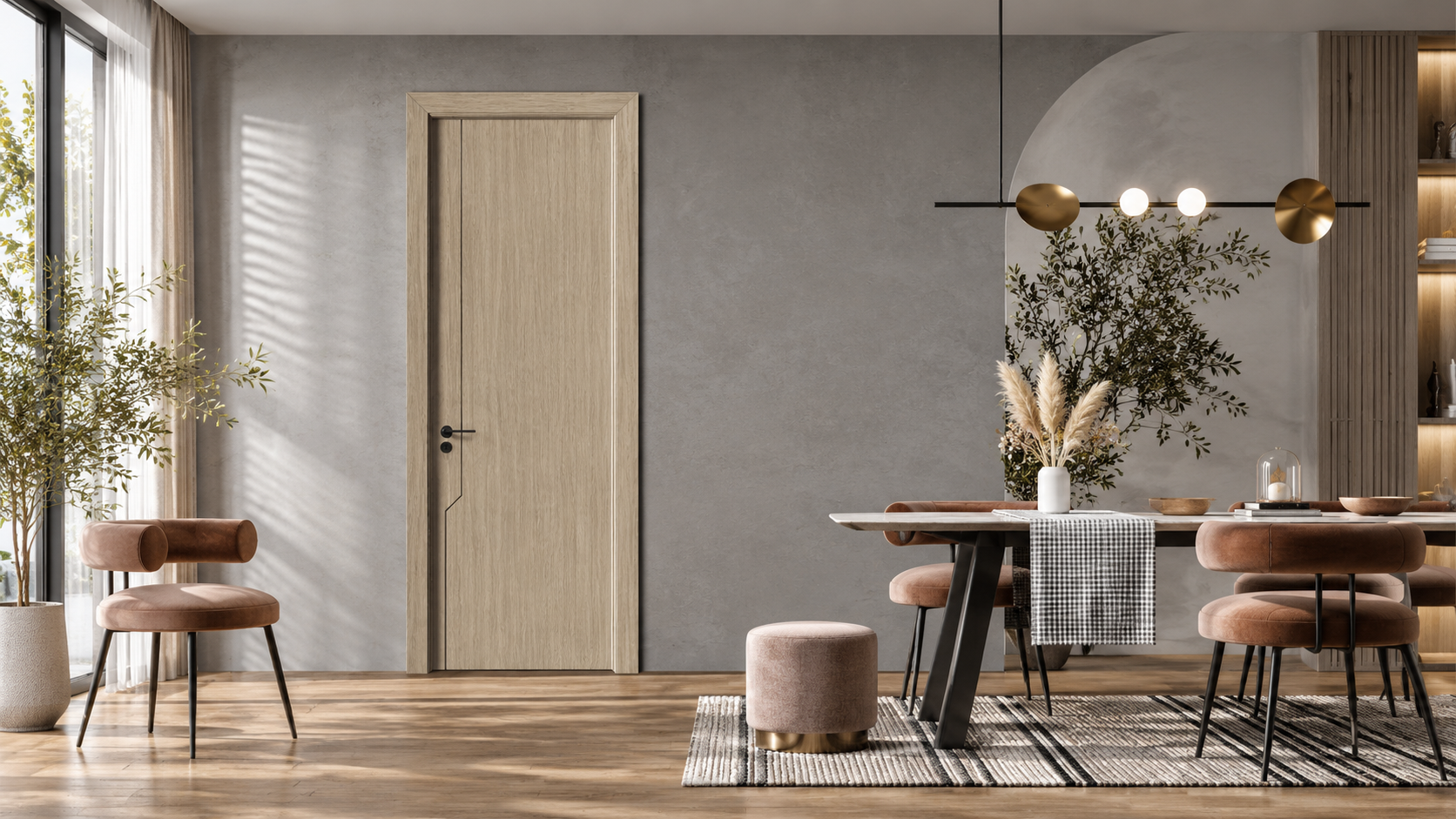
In whole-house customization projects, doors are not merely functional components; they also influence the aesthetic appeal, comfort, and long-term performance of interior spaces. For homeowners, designers, developers, and furniture purchasers, the appropriate door material must balance style, durability, moisture resistance, and indoor air quality.
This is where WPC doors present a practical solution.
WPC, or Wood Plastic Composite, combines wood-based materials with polymer components. The end result is a stable material well-suited for various interior applications. When paired with custom sizing and matching finishes, WPC doors can be integrated into a comprehensive whole-house design.
For projects requiring durable surfaces and low-emission materials, waterproof WPC interior doors and low-VOC interior doors for custom homes are worthy of consideration.
Why WPC doors are well-suited for whole-house custom interiors
A whole-house custom project typically encompasses bedrooms, bathrooms, kitchens, hallways, studies, and storage areas, each with distinct requirements.
For instance, a bedroom door may prioritize appearance and daily comfort, whereas a bathroom door demands superior moisture resistance. A door adjacent to a kitchen must also withstand frequent cleaning and humidity fluctuations.
WPC doors provide a consistent material solution across these diverse spaces.
Their solid, stable structure helps mitigate common issues associated with moisture exposure and daily usage. Simultaneously, their surfaces can be tailored in various colors, textures, and styles to complement custom cabinetry and other furniture pieces.
Consequently, adopting a unified door system contributes to a more cohesive interior aesthetic.
Waterproof WPC interior doors for moisture-prone areas
Moisture represents one of the primary challenges for interior doors.
Traditional wood-based doors may absorb moisture during prolonged exposure to humid environments, potentially leading to swelling, warping, or surface degradation.
Waterproof WPC interior doors are engineered for enhanced moisture resistance, making them ideal for areas such as:
-
Bathrooms
-
Laundry rooms
-
Kitchens
-
Utility rooms
-
Humid residential regions
The benefits extend beyond water resistance; a stable door material also reduces maintenance demands in high-traffic households.
In whole-house customization projects, this ensures a consistent design language transitions seamlessly from dry rooms to moisture-prone areas.
Low-VOC interior doors for custom homes
Indoor air quality constitutes another critical aspect of modern residential design.
Doors, cabinets, wall panels, and other interior products collectively influence the overall indoor environment. Therefore, material selection must consider both aesthetics and emissions.
ENNOR prioritizes low-emission materials in its custom furniture and millwork solutions. Its material offerings include options compliant with E0 and CARB Phase 2 standards, depending on the selected product and project specifications.
For purchasers seeking low-VOC interior doors for custom homes, it is crucial to verify actual material specifications and supporting documentation rather than relying solely on generic terms such as "eco-friendly."
This approach enables homeowners and project teams to make more informed material decisions.
Optimized for whole-house custom doors
Whole-house projects often impose stringent requirements on dimensions, colors, layouts, and finishes. Standard doors may not align with the design vision.
Custom manufacturing resolves this limitation.
Whole-house custom doors can be fabricated to precise project dimensions and design aesthetics. Door panels can be coordinated with wardrobes, cabinets, wall storage systems, and other built-in furniture.
For example, a modern residence may feature:
-
Floor-to-ceiling doors
-
Minimalist flat-panel designs
-
Wood-grain finishes
-
Soft neutral color palettes
-
Concealed or streamlined hardware
-
Coordinated cabinet and wall finishes
This creates visual continuity throughout the home.
ENNOR delivers custom cabinetry and full-space furniture solutions for residential projects, supporting tailored dimensions, layouts, finishes, and material selections.
Durability meets ease of maintenance
Daily usage places considerable demands on interior doors. They undergo frequent opening and closing, are touched regularly, and are exposed to dust, cleaning agents, and occasional impacts.
A durable door material thus reduces long-term maintenance requirements.
WPC doors offer a practical combination of stability and moisture resistance. Their smooth surfaces also simplify routine cleaning.
For family homes, rental properties, apartments, and large residential developments, this proves particularly advantageous. An easy-to-clean, low-maintenance door helps preserve the interior's consistent appearance over time.
How WPC doors integrate into an ENNOR custom interior
A successful whole-house project transcends mere door selection; it requires cohesive functionality among all elements.
ENNOR specializes in bespoke wood millwork and full-space custom furniture for residential, hospitality, and commercial projects. Its 26,000㎡ smart factory supports customized production for international projects.
For custom homes, WPC doors can be coordinated with:
-
Custom wardrobes
-
Bedroom storage solutions
-
Bathroom vanities
-
Kitchen cabinets
-
Study room furniture
-
Wall storage systems
-
Decorative wall panels
This integrated approach minimizes discrepancies in color, proportions, and finishes between disparate interior elements.
It also streamlines project planning by treating doors and furniture as components of a unified interior system.
Key considerations when ordering WPC doors
Before selecting a WPC door supplier, purchasers should evaluate several critical factors.
First, verify the material. Confirm the core structure, surface finish, and moisture-resistant properties.
Second, review emission requirements. If the project mandates low-emission materials, request relevant test reports and certifications.
Third, confirm customization options. Check available door sizes, finishes, colors, edge profiles, and hardware compatibility.
Finally, assess production capabilities. For whole-house projects, consistent quality across numerous doors is as important as the design of individual units.
A supplier with integrated engineering and manufacturing expertise enhances overall efficiency.
Build a more durable whole-home interior with ENNOR
WPC doors offer an optimal balance of durability, moisture resistance, design flexibility, and ease of maintenance. For modern residential projects, they prove especially valuable when integrated with custom furniture and coordinated interior finishes.
For purchasers seeking WPC doors, whole-house custom doors, or low-VOC interior doors for custom homes, the priority extends beyond aesthetics. Material performance, emission standards, customization options, and manufacturing quality all play pivotal roles.
Through a comprehensive customization approach, ENNOR transforms individual doors and furniture pieces into a cohesive whole-home interior solution.


