Which is Better, PVC or Composite Doors?
News Details
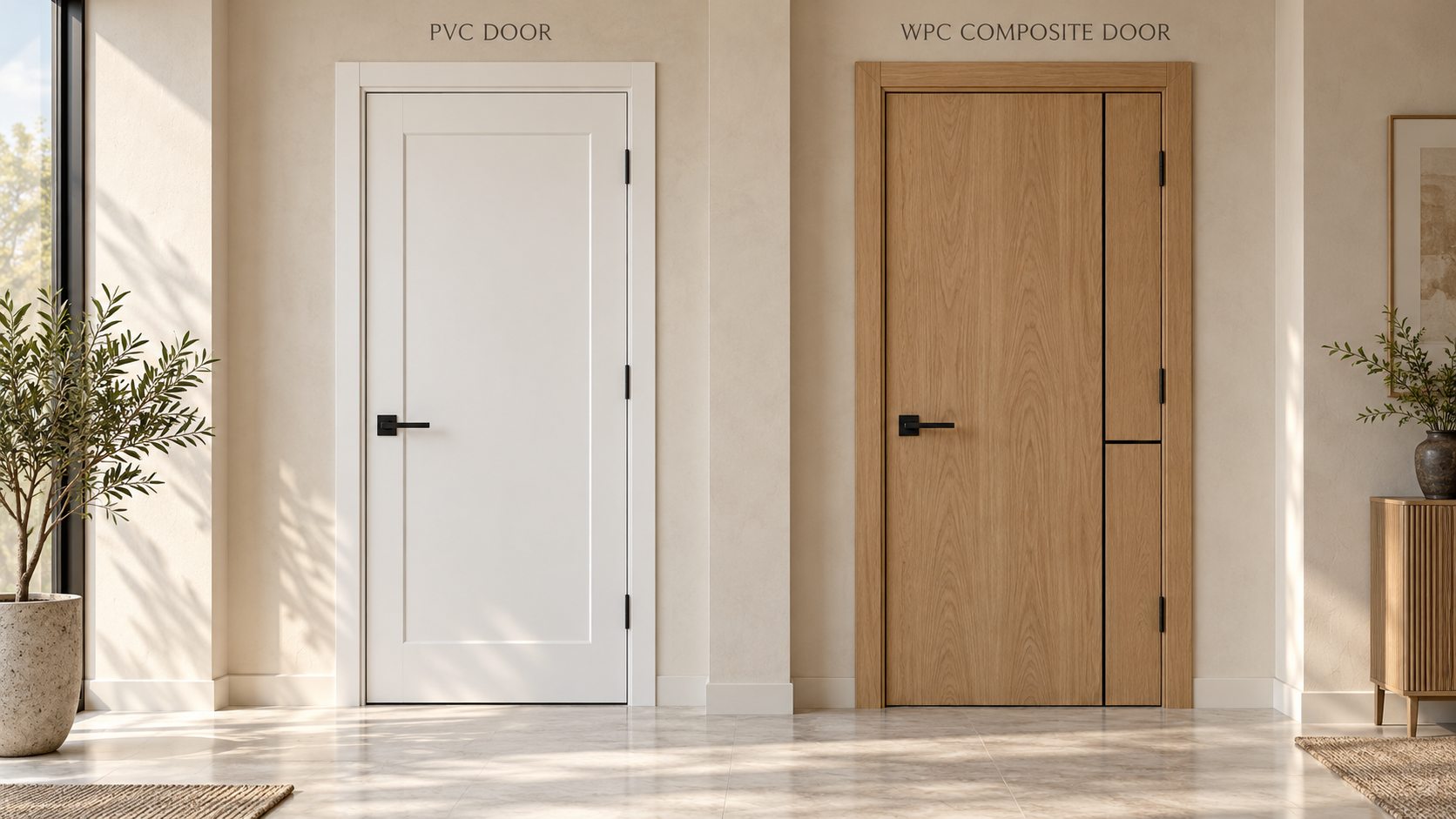
PVC doors can be a practical choice when price and easy cleaning come first. Composite doors may be a better fit when a project needs a specific finish, construction, or level of performance. However, neither material is best for every opening.
The first step is to define the door type. A basic PVC interior door, a reinforced uPVC entrance door, and a wood plastic composite interior door serve different needs. Comparing them by material name alone can lead to the wrong purchase.
For homeowners, designers, and project buyers, the better choice starts with where the door will go and what it must do.
PVC vsComposite Doors: What Is the Difference?
PVC stands for polyvinyl chloride. In door products, the term can refer to a plastic door panel, a uPVC frame system, or even a decorative surface over another core. Therefore, buyers should ask what is inside the door.
Composite doors combine materials. Yet this is a broad category:
- GRP composite entrance doors typically combine a glass-reinforced plastic skin with an insulating core and other structural parts.
- WPC doors use wood plastic composite and are often offered for interior applications.
- Other composite doors may use different layered cores and surface materials.
A GRP entrance door is one type of composite door; its construction should not be assumed to match a WPC interior model.
ENNOR’s WPC-10, for example, is specifically listed as an interior door. Its intended use is an important starting point when comparing it with other options.
How to Compare PVC and Composite Doors
A useful comparison looks beyond the door face.
| Buying factor | What to compare |
|---|---|
| Price | Complete installed cost, including frame, hardware, delivery, and fitting |
| Strength | Core structure, reinforcement, hinge fixing, and test results |
| Appearance | Finish samples, frame color, surface texture, and design options |
| Moisture exposure | Suitability of the panel, edges, frame, and hardware |
| Sound control | Tested performance of the complete door assembly |
| Exterior use | Weather resistance, insulation, security, and approved application |
| Maintenance | Cleaning instructions, adjustments, spare parts, and warranty |
Basic PVC interior doors may suit a tight budget. Meanwhile, a WPC model may suit a project that calls for a coordinated wood-look finish. However, quotations should cover the same sizes, hardware, and installation scope before buyers compare prices.
Also, a heavier door is not automatically more secure or better at blocking sound. Those claims need evidence for the actual product.
Project Example: Choosing Doors for an Apartment Renovation
The following is an illustrative selection case, not a completed ENNOR customer project.
Consider an apartment renovation with bedroom doors, bathroom doors, and a main entrance. The owner wants easy care, a consistent interior style, and clear control over costs.
Instead of choosing one door type for every room, the project team divides the openings by function.
Bedrooms: focus on finish and fit
For light walls and neutral cabinetry, the team could consider ENNOR’s White Wood Grain WPC Interior Door WPC-10. Its white wood-grain appearance and angular black details offer a clear design reference. Sizes, finishes, frame details, and hardware can be discussed with ENNOR, subject to confirmation.
Before ordering, the team would check opening sizes, swing directions, privacy locks, and any sound-control requirements.
Bathrooms: check the whole assembly
For a darker interior scheme, ENNOR’s Dark Charcoal Flush WPC Door WPC-05 is listed as a moisture-resistant interior option, with bathrooms among its applications.
Still, the buyer should confirm suitability for the actual exposure. Humid air and direct, repeated water contact are different conditions. Frame materials, edge details, and ventilation also need attention.
Main entrance: prepare a separate specification
The entrance needs its own review. An opening exposed to rain and sunlight requires suitable exterior performance. An entrance onto an enclosed corridor may have different fire, sound, and security requirements.
The proposed selection is therefore based on each opening’s needs. Interior appearance guides the bedroom choice, moisture exposure guides the bathroom review, and documented performance guides the entrance specification.
Common Problems with Composite Doors
The phrase “composite” does not mean a door is free from faults. Problems with composite doors can arise from the product, the installation, or the conditions of use.
Sticking or rubbing
A door may catch on the frame because of poor alignment, hinge movement, or temperature-related movement. Composite entrance-door manufacturers acknowledge that thermal movement can occur. Follow the supplier’s fitting guidance and movement tolerances.
Difficult locking
If the latch and strike plate do not line up, the handle may feel stiff. The installer should check the frame and hardware before assuming the panel needs replacement.
Surface damage
Scratches, chips, or damage to a decorative layer may be hard to hide. Ask how the specific finish can be repaired and whether matching replacement parts are available.
Unexpected performance
A door may disappoint because the buyer expected exterior weather resistance or strong sound insulation from a product designed for ordinary interior use. Written specifications help prevent this mismatch.
What Are the Disadvantages of Composite Doors?
The disadvantages of composite doors depend on their construction. Potential drawbacks include:
- Higher initial cost: Some composite systems cost more than basic PVC options.
- More demanding handling: Heavier models may need stronger hardware and extra care during fitting.
- Limited site alterations: Trimming or drilling may be restricted by the core and edge design.
- Finish repair limits: Damage may require a specialist repair or replacement.
- Different performance across models: The word “composite” does not guarantee insulation, security, or weather resistance.
These points do not rule out composite doors. Instead, they show why buyers should compare a specific model with a specific alternative.
Buying Composite Exterior Doors and Frames
When sourcing composite exterior doors and frames, evaluate the complete assembly. The panel, frame, threshold, seals, glazing, and hardware must work together.
For example, a composite entrance-door leaf may be supplied with a PVC outer frame. This means “PVC or composite” is not always a choice between two completely separate material systems.
Ask suppliers to confirm:
- Approval for the planned exterior exposure.
- Weather and thermal performance for the selected configuration.
- Security specifications for the full assembly.
- Installation, drainage, and sealing requirements.
- Warranty terms for the finish, hardware, and door panel.
Do not assume that an interior WPC door is suitable outdoors because it is described as moisture resistant.
What to Ask Composite Doors Suppliers
When comparing composite doors suppliers, send the same project brief to each company. Include the opening schedule, location, finish, quantity, and required performance.
Then request a clear description of the core, surface, frame, and included hardware. Where a performance claim matters, ask for supporting documents that apply to the quoted configuration.
For larger orders, approve a sample before production. Check color, texture, frame joints, handle operation, and packaging. This gives both sides a shared reference and reduces misunderstandings.
Choose the Right Door with ENNOR
PVC may be the better option for a simple, budget-led requirement. A WPC interior door may be more suitable when the project calls for a particular wood-grain finish and coordinated design. For an exterior entrance, choose according to verified performance of the complete door assembly.
Explore ENNOR’s door and interior solutions and share your opening sizes, preferred finishes, quantities, and application details. A clear brief makes it easier to compare suitable options and build a consistent interior.


