OEM Custom Cabinet Manufacturing: From Design Files to Mass Production
News Details
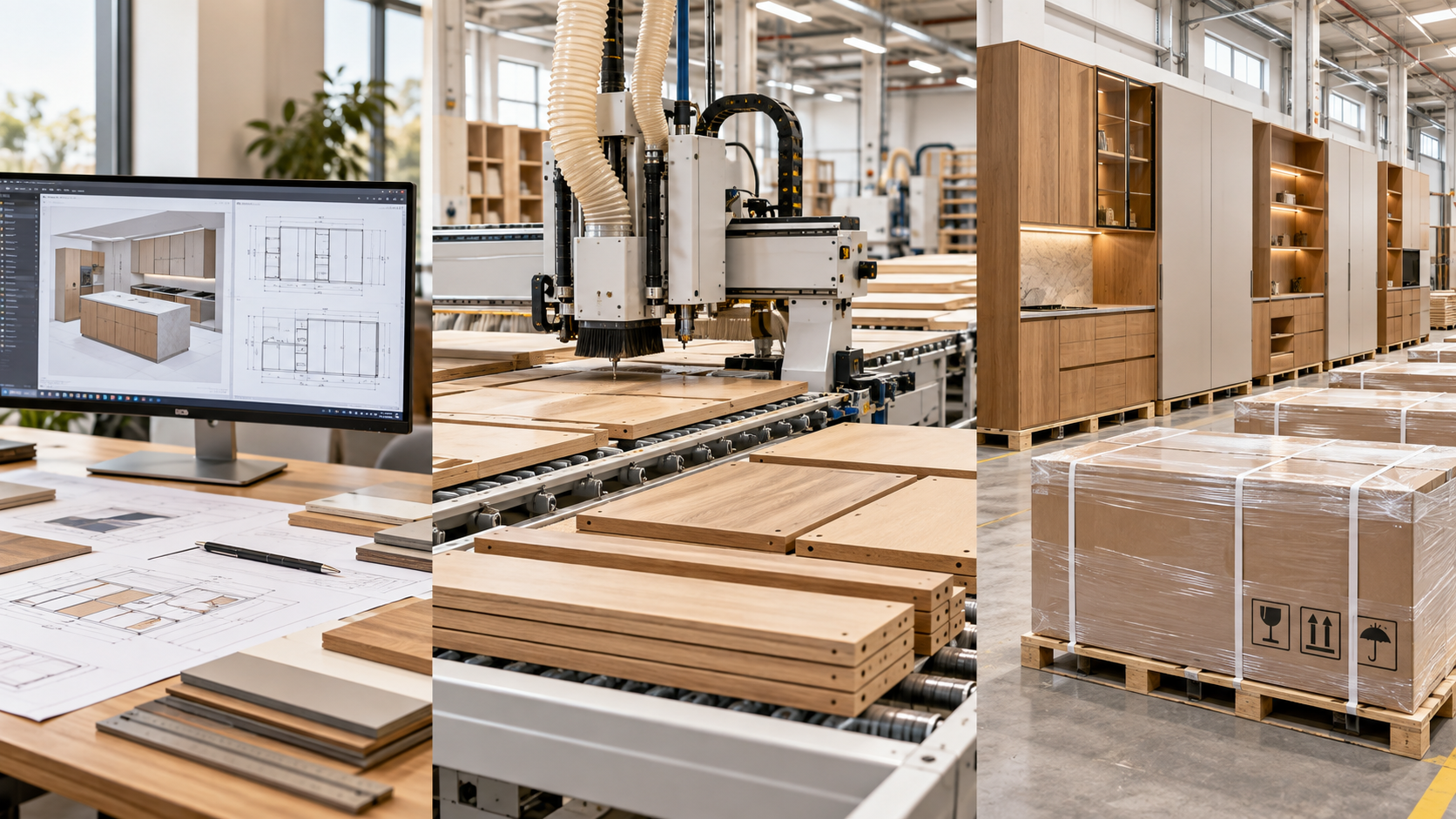
How a Cabinet OEM Manufacturer Turns Design Into Real Products
For brands, developers, and project buyers, cabinet production is not only about making furniture. It is about turning a design idea into stable, repeatable, and market-ready products. This is why many companies choose an experienced OEM cabinet manufacturer.
ENNOR supports B2B clients with private label cabinets, custom furniture OEM services, and cabinet ODM solutions. From design files to bulk production, ENNOR helps each project move forward with clear steps, careful checks, and strong factory support.
Step 1: Reviewing the Design Files
Every project starts with the design file. This may include CAD drawings, 3D renderings, shop drawings, material lists, color samples, or product photos. First, ENNOR reviews the size, structure, function, and finish requirements.
Then, the team checks whether the design is ready for production. For example, cabinet depth, door clearance, hardware placement, and board thickness must all be clear. If something is missing, ENNOR works with the client to adjust it before sampling begins.
This early review helps reduce mistakes later. As a result, the project can save time, control cost, and avoid delays.
Step 2: Choosing Materials and Finishes
After the design review, the next step is material selection. Cabinets may use plywood, MDF, particle board, veneer, laminate, lacquer, glass, metal, stone, or other finishes. Hardware can also affect the final quality, so hinges, slides, handles, and lighting systems must be chosen with care.
ENNOR focuses on high-end custom millwork and full-space custom furniture. Its production follows strict eco-compliance standards such as E0, CARB P2, and F4-Star. Therefore, clients can meet both quality needs and market requirements.
For private label cabinets, finish consistency is very important. A brand may need the same color, texture, and edge detail across many orders. Because of this, ENNOR keeps clear material records and production standards for repeat orders.
Step 3: Making Samples Before Mass Production
Before mass production begins, a sample is usually made. This step allows the client to check the real product, not just the drawing. The sample shows the cabinet structure, finish, hardware, edge detail, and packing method.
If changes are needed, ENNOR updates the design and confirms the details again. This process is useful for custom furniture OEM projects because it helps the final product match the client’s brand and market position.
In addition, sampling helps test production flow. Once the sample is approved, the factory can move into bulk production with more confidence.
Step 4: Preparing for Bulk Manufacturing
Mass production needs more than machines. It needs a clear system. Before production starts, ENNOR prepares the bill of materials, cutting plans, process cards, hardware lists, and quality check points.
ENNOR operates a 26,000㎡ smart factory with advanced automated production lines. This gives the factory strong capacity for large-scale cabinet and furniture projects. At the same time, automation helps improve size accuracy and production speed.
For cabinet ODM and OEM orders, this stage is key. It ensures that every product follows the same approved standard, from the first cabinet to the last one.
Step 5: Production with Quality Control
During production, each part must be cut, edged, drilled, finished, assembled, and inspected. Small errors can affect the whole cabinet. For this reason, quality control is built into each stage.
ENNOR checks size accuracy, surface finish, color match, hardware fit, structure strength, and packing safety. Also, each product is reviewed against the approved sample and drawings.
This is especially important for overseas orders. Cabinets must arrive in good condition and be easy to install. So, strong packing and clear labeling are part of the process.
Step 6: Branding, Packing, and Delivery
Many clients need private label cabinets for their own markets. ENNOR can support brand-based needs such as logo labels, custom cartons, installation guides, product tags, and packing marks.
After final inspection, the cabinets are packed for shipment. Then, the order is arranged for delivery based on the project plan. ENNOR exports products to markets such as the United States, Germany, Japan, South Korea, the UAE, and Saudi Arabia.
Because each market may have different needs, ENNOR works closely with clients to support project timing, product standards, and delivery details.
Why ChooseENNORfor OEM and ODM Cabinets?
ENNOR was founded in 2010 and has built strong experience in bespoke wood millwork, commercial office furniture, residential cabinetry, and hospitality projects. As an OEM cabinet manufacturer, ENNOR helps clients move from design files to mass production with a clear and practical process.
For brands, ENNOR can produce private label cabinets with stable quality and repeatable details. For project buyers, ENNOR can support custom furniture OEM orders with flexible design and strong factory capacity. For clients who need design support, cabinet ODM services can help turn market ideas into finished cabinet products.
Most importantly, ENNOR combines custom design, smart production, and export experience. This makes it a reliable partner for long-term B2B cabinet projects.
Final Thoughts
OEM custom cabinet manufacturing works best when each step is clear. First, the design files must be checked. Next, the materials and finishes must be confirmed. Then, samples, production plans, quality checks, packing, and delivery all need careful control.
With ENNOR, clients can turn cabinet ideas into real products for global markets. Whether the goal is private label cabinets, custom furniture OEM production, cabinet ODM development, or large-scale OEM cabinet manufacturing, ENNOR provides the factory strength and project support needed to bring each order to life.


