How to Source Bathroom Vanities for Hospitality Projects
News Details
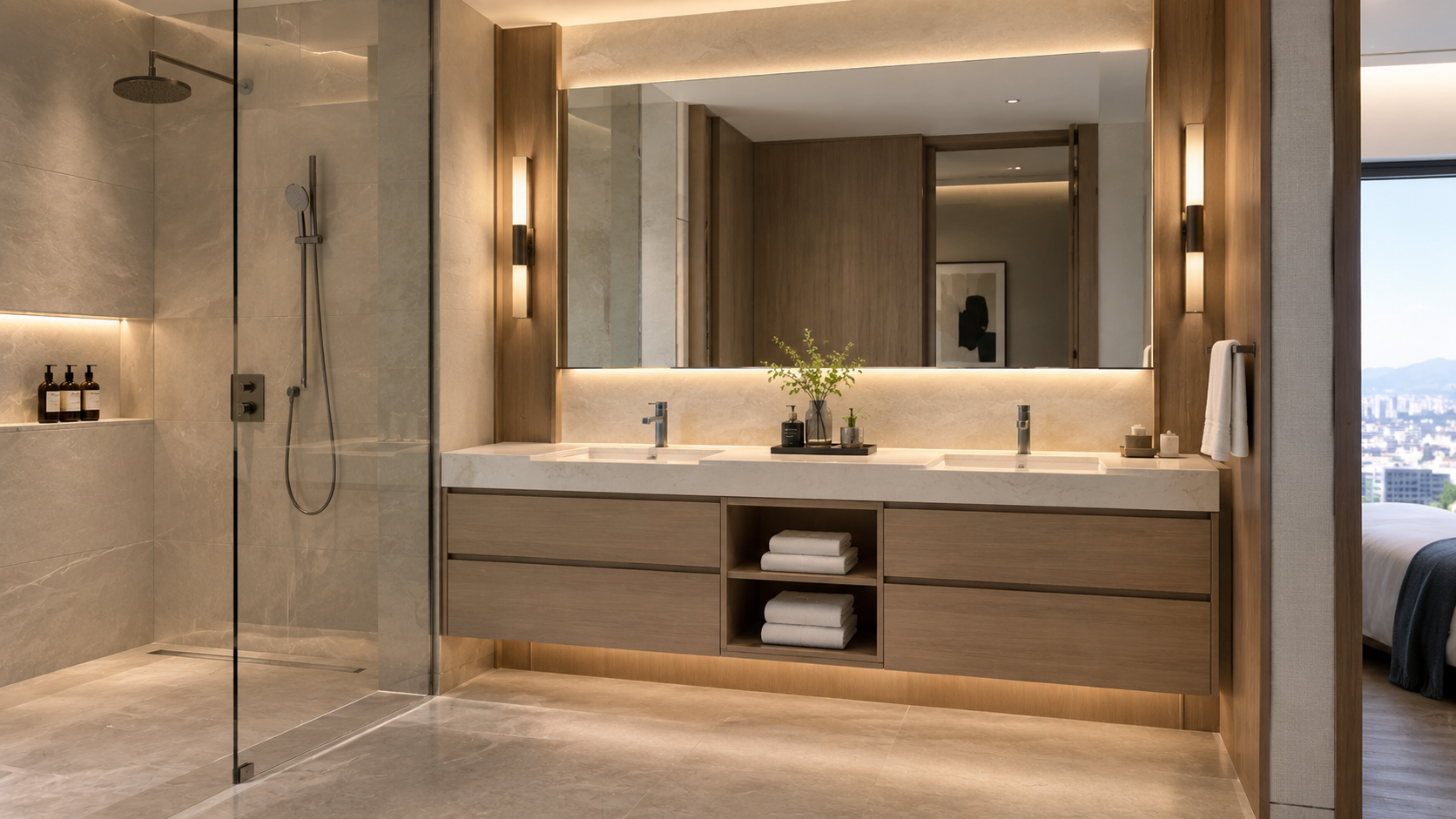
Bathroom design plays an important role in the guest experience. In hotels, resorts, serviced apartments, and other hospitality spaces, a bathroom vanity must do more than look attractive. It should handle daily use, resist moisture, fit the room design, and support efficient installation.
For developers, contractors, interior designers, and purchasing teams, sourcing the right vanity can be challenging. The market offers many materials, finishes, sizes, and suppliers. However, not every product is suitable for a busy hospitality environment.
This guide explains how to source a reliable hotel bathroom vanity, select suitable materials, and work with a professional bathroom vanity cabinet manufacturer.
1. Understand Your Hospitality Project Requirements
Before contacting suppliers, define the basic requirements of your project. This step helps you compare products and avoid costly changes later.
Start by reviewing the following points:
-
Project type: Hotel, resort, serviced apartment, boutique hotel, or commercial guest facility.
-
Number of rooms: The total quantity affects production planning and pricing.
-
Bathroom size: Available wall space, plumbing locations, and cabinet depth.
-
Design style: Modern, minimalist, classic, luxury, or natural wood.
-
Installation plan: Wall-mounted, floor-standing, or integrated vanity systems.
-
Target budget: Material, hardware, shipping, and installation costs.
-
Delivery schedule: Sample approval, production, and shipping time.
For example, a luxury hotel may require custom finishes and premium hardware. Meanwhile, a large hotel chain may focus more on consistent quality, easy installation, and repeat production.
Clear project information allows suppliers to prepare a more accurate quotation.
2. Choose the Right Materials for a Hotel Bathroom Vanity
Bathrooms are exposed to water, steam, cleaning products, and frequent use. Therefore, material selection is one of the most important decisions.
A suitable hotel bathroom vanity should have a strong structure and a surface that is easy to clean.
Common material options include:
Moisture-Resistant MDF
Moisture-resistant MDF can be a practical choice for bathroom cabinets when the correct grade is selected and the material is properly sealed.
It offers a smooth surface for paint, laminate, or other finishes. In addition, it can support detailed designs and custom shapes.
However, moisture-resistant MDF is not waterproof. Exposed edges and joints must receive suitable protection.
Plywood
Plywood offers good strength and dimensional stability. It can be suitable for vanity boxes, drawer components, and other structural parts.
Its performance depends on the plywood grade, adhesive, surface treatment, and edge protection. Therefore, buyers should request clear material specifications before placing an order.
HPL and Laminate Finishes
High-pressure laminate, often called HPL, is available in many colors and textures. It is also easy to clean and can provide good resistance to everyday wear.
Laminate finishes may be suitable for hotel projects that require a consistent appearance across many rooms.
Solid Wood and Wood Veneer
Solid wood and wood veneer can create a warm, premium appearance. They are often used in boutique hotels and luxury hospitality projects.
However, wood-based materials need suitable sealing and careful moisture control. The supplier should explain how the finish protects the material in bathroom conditions.
3. Why a Moisture Resistant Vanity Matters
A bathroom vanity is regularly exposed to water splashes and high humidity. Poor material selection can lead to swelling, edge damage, peeling finishes, or cabinet deformation.
For this reason, a moisture resistant vanity should be designed as a complete system.
Pay attention to the following details:
-
Water-resistant or moisture-resistant cabinet materials.
-
Properly sealed panel edges.
-
Durable surface finishes.
-
Protected joints and connection points.
-
Suitable sink and countertop installation.
-
Good ventilation around the cabinet.
-
Hardware designed for frequent use.
-
Proper protection around plumbing openings.
The area beneath the sink deserves special attention. Water from leaks or cleaning may collect inside the cabinet. A well-designed vanity should allow easy access for inspection and maintenance.
Also, remember that moisture resistance does not mean complete waterproofing. The cabinet design, installation quality, and bathroom ventilation all affect long-term performance.
4. Select the Right Vanity Design and Layout
Hospitality projects often use repeated bathroom layouts. A suitable vanity design can improve both the appearance and function of each room.
Wall-Mounted Vanities
Wall-mounted vanities create a clean, modern appearance. They can also make the floor easier to clean.
However, the wall structure must support the cabinet and countertop weight. The installation team should confirm the fixing method before production.
Floor-Standing Vanities
Floor-standing vanities provide a stable structure and can offer more storage space. They are suitable for many hotel and residential-style bathrooms.
They may also simplify installation when the bathroom layout requires a traditional cabinet base.
Single and Double Sink Vanities
Single-sink vanities are common in standard guest rooms. Double-sink designs may be more suitable for luxury suites, villas, and larger bathrooms.
The choice depends on room size, guest needs, plumbing layout, and project budget.
Custom Vanity Systems
Custom vanities allow buyers to coordinate cabinet dimensions, colors, handles, countertops, mirrors, and storage layouts.
This approach is useful when a project has unusual room dimensions or requires a consistent design across different bathroom types.
5. Review Hardware and Functional Details
A vanity may look excellent, but weak hardware can create problems after installation.
Hotel bathrooms often receive repeated daily use. Therefore, drawers, doors, hinges, and handles should be selected with durability in mind.
When reviewing a supplier's proposal, consider:
-
Soft-close hinges.
-
Smooth drawer runners.
-
Corrosion-resistant hardware.
-
Strong cabinet connectors.
-
Easy-to-clean handles.
-
Stable countertop supports.
-
Accessible plumbing space.
-
Replaceable hardware components.
Soft-close hardware can reduce noise and improve the guest experience. At the same time, easy access to plumbing and internal components can make future maintenance more efficient.
For large projects, using the same hardware system across all rooms can also simplify spare-parts management.
6. Check Material Safety and Emission Standards
Indoor air quality is another important consideration, especially in hotels and other enclosed spaces.
Wood-based cabinet panels may contain adhesives that release formaldehyde. Therefore, buyers should ask about material emission performance.
Depending on the destination market, a project may require standards such as:
-
E0.
-
CARB Phase 2.
-
EPA TSCA Title VI.
-
F4-Star.
These standards come from different testing and regulatory systems. They should not be treated as identical.
Ask the supplier to provide the relevant test reports or compliance documents for the actual materials used in the vanity.
In addition, review the coatings, adhesives, edge materials, and other components. A low-emission cabinet panel does not automatically mean that the complete vanity system is free from all VOC emissions.
7. Compare Bathroom Cabinet Wholesale Suppliers
For large hospitality projects, purchasing cabinets in bulk can help control costs and maintain design consistency.
However, the lowest unit price is not always the most cost-effective option. Buyers should compare the full supply package.
A reliable bathroom cabinet wholesale supplier should provide clear information about:
-
Material specifications.
-
Available sizes and finishes.
-
Customization options.
-
Minimum order quantities.
-
Sample production.
-
Production capacity.
-
Quality control procedures.
-
Packaging methods.
-
Shipping arrangements.
-
Warranty and after-sales support.
Ask for a detailed quotation that separates cabinet materials, hardware, countertops, packaging, and delivery costs.
Also, confirm whether the quoted price includes installation accessories, assembly, or special finishes. Clear pricing helps reduce unexpected expenses during the project.
8. Work with an Experienced Bathroom Vanity Cabinet Manufacturer
Choosing the right bathroom vanity cabinet manufacturer can make the sourcing process easier.
A professional manufacturer should be able to support the project from design development to final delivery.
The process may include:
Design Review
The engineering team reviews drawings, dimensions, plumbing positions, and installation requirements.
Material Confirmation
The buyer selects the cabinet core, surface finish, hardware, and countertop materials.
Sample Approval
A physical sample allows the project team to check the color, texture, dimensions, storage layout, and overall quality.
Production
After approval, the manufacturer produces the required quantity according to the confirmed drawings and specifications.
Quality Inspection
Finished products should be checked for dimensions, surface quality, hardware operation, and assembly accuracy.
Packaging and Delivery
Proper packaging helps protect finished vanities during handling and long-distance transportation.
This structured process is particularly important for hotel projects with hundreds of rooms.
9. Why Choose ENNOR for Hospitality Cabinet Projects?
ENNOR specializes in custom cabinetry and millwork for residential, hospitality, and commercial projects.
The company provides custom furniture solutions supported by design engineering, automated manufacturing, and project-based production. Its product range includes custom bathroom vanity solutions for different interior styles.
ENNOR supports buyers with:
-
Custom cabinet dimensions and layouts.
-
A wide range of finishes and material options.
-
OEM and ODM manufacturing support.
-
Design and engineering coordination.
-
Production for large project orders.
-
Quality inspection before delivery.
-
Export packaging for international shipments.
ENNOR also highlights material options associated with E0, CARB Phase 2, and F4-Star requirements. The exact material and compliance documentation should be confirmed according to the project specification.
For hospitality buyers, this integrated approach can simplify communication between design, purchasing, production, and delivery teams.
Final Thoughts
Sourcing bathroom vanities for hospitality projects requires more than choosing an attractive design. Buyers should consider moisture resistance, material quality, hardware durability, indoor air quality, installation, and long-term maintenance.
A well-planned hotel bathroom vanity can support a better guest experience while reducing repair and replacement needs.
Whether you need a moisture resistant vanity, a large bathroom cabinet wholesale order, or a customized vanity system, start with clear project requirements and reliable supplier documentation.
With custom manufacturing capabilities and experience in international cabinetry projects, ENNOR can help turn your bathroom design into a practical, consistent, and durable solution.
Contact ENNOR to discuss your hospitality vanity project, request material samples, or receive a customized quotation.


